



Michael Bervell’s Untitled (Booth #513) wasn’t a stunt.
It was a philosophical intervention.
At the National Retail Federation’s annual conference, TestParty nearly got kicked out—not for disrupting the event, but for exposing an assumption no one wanted to name.
The booth didn’t look like a booth.
No LED monoliths.
No branded carpet.
No desperate swag.
Instead:
A table. Broken. Disassembled. Exposed.
Next to it, a sign: “Ceci n’est pas une booth.”
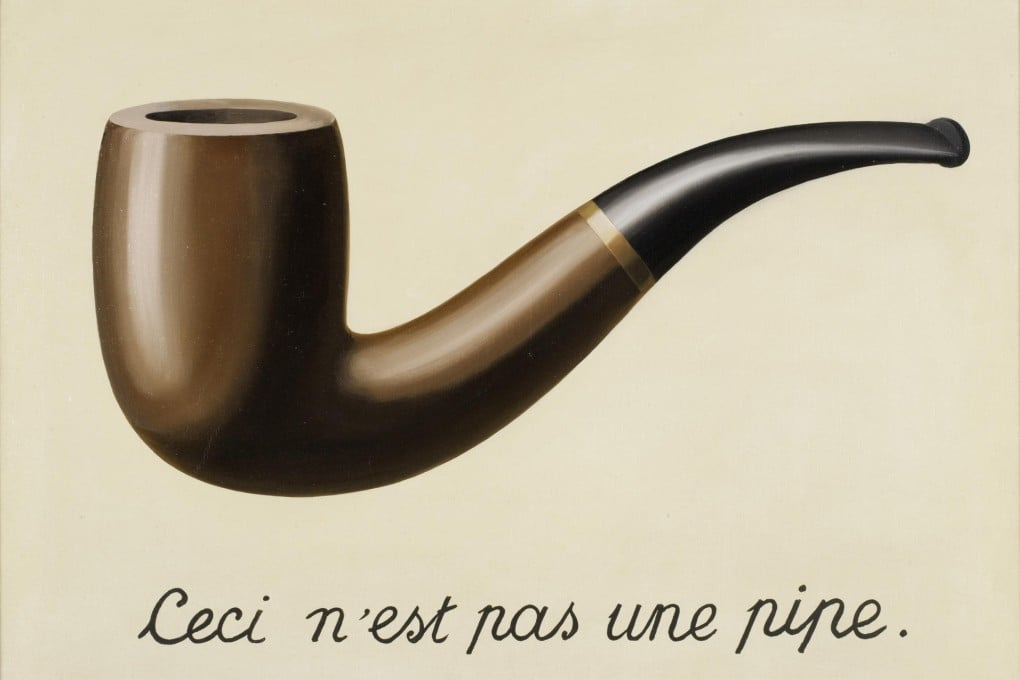
Inspired by René Magritte’s The Treachery of Images, the work challenged a deceptively simple idea:
A representation of a thing is not the thing itself.
A painting of a pipe is not a pipe.
A pile of parts is not a booth.
And a website that cannot be navigated, read, or understood—
Is it really a website?
The reactions were immediate.
People stopped.
Stared.
Photographed it.
Some were amused. Others confused. A few angry.
Eventually, NRF staff intervened.
“This isn’t a booth,” they said.
“It’s unprofessional.”
That was the moment the work completed itself.
Because 96% of websites fail basic accessibility standards.
Screen readers can’t parse them.
Keyboard users can’t navigate them.
They are technically websites in the same way this was technically a booth.
The barriers are invisible to most users.
But for the 1.3 billion people living with disabilities worldwide, they determine who gets to exist in the modern economy at all.
This philosophy runs consistently through Michael’s work.
During a visit to the Picasso Museum in Málaga, he reflected on Picasso’s line:
“Every child is an artist. The problem is how to remain an artist once we grow up.”
In an AI-first world, execution is no longer scarce.
You don’t need to code.
You don’t need to design.
You don’t need to hire a team.
You can “vibe” your way from idea to reality.
Which means the real constraint is no longer capability—it’s imagination.
And imagination, for Michael, is not about novelty for novelty’s sake.
It’s about seeing what systems quietly normalize—and choosing to question them.
Untitled (Booth #513) reframes accessibility not as compliance theater, but as craft.
Not decoration, but foundation.
Not overlay, but infrastructure.
Not spectacle, but care.
The exposed table offers no place to hide.
Only structure.
Viewers are encouraged to approach.
The work is not complete without you.
Sometimes, to help people understand that something is broken, you have to stop pretending it’s whole.
Ceci n’est pas une booth.
And that’s the point.
Artist
Michael Bervell

Michael Bervell is an interdisciplinary artist, writer, and technologist whose work examines access, imagination, and the invisible systems that shape participation in the modern world.